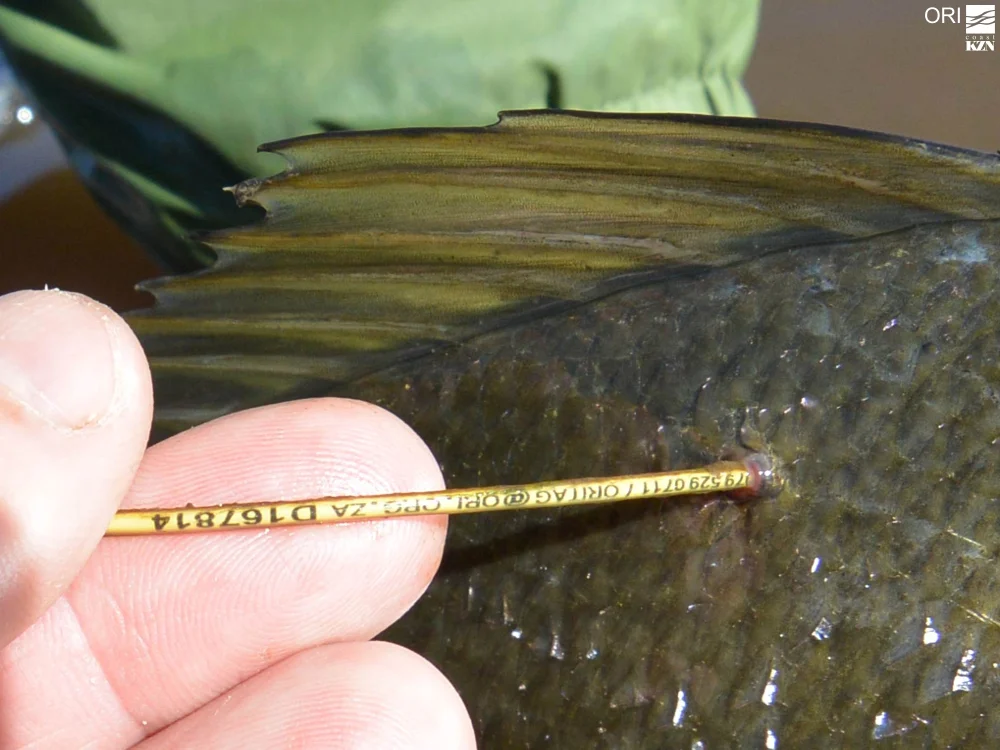
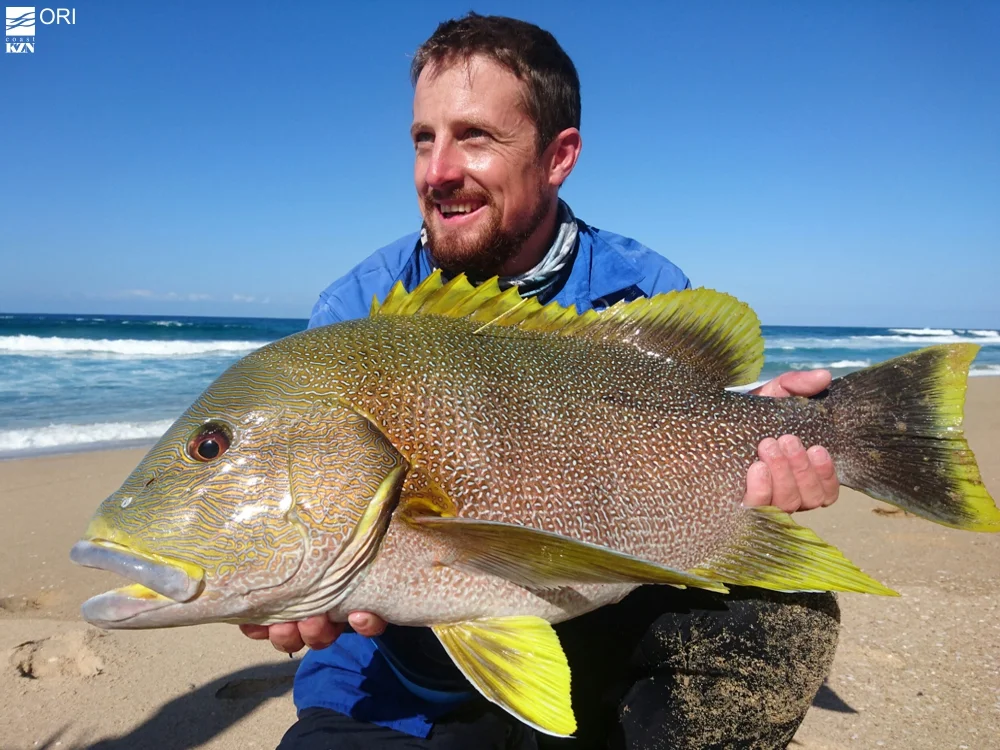
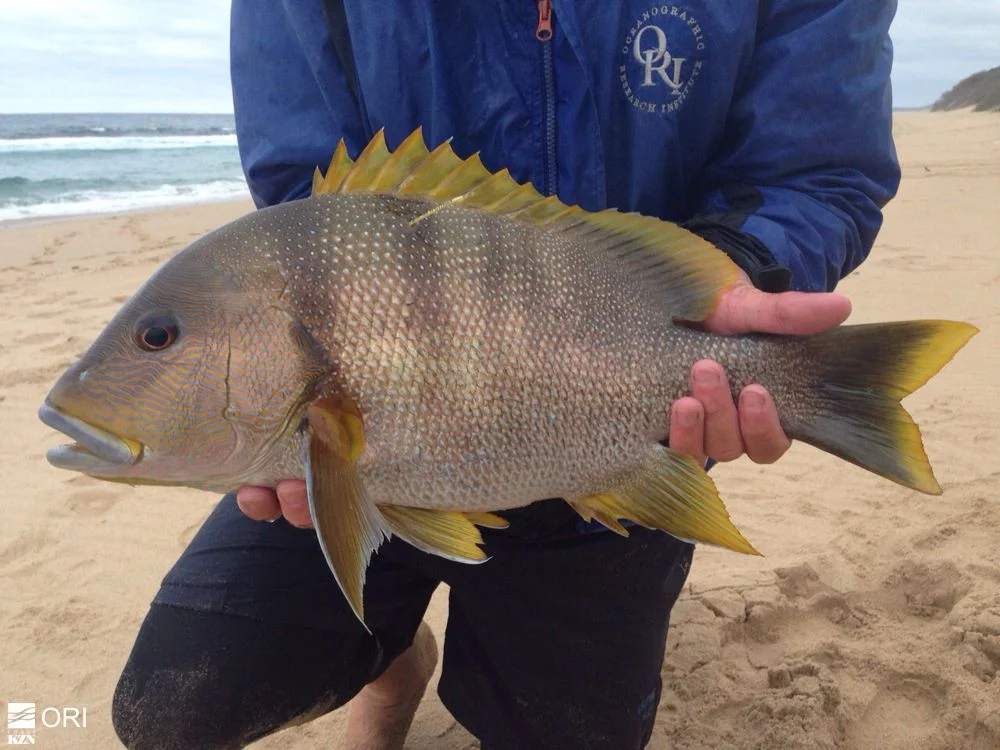
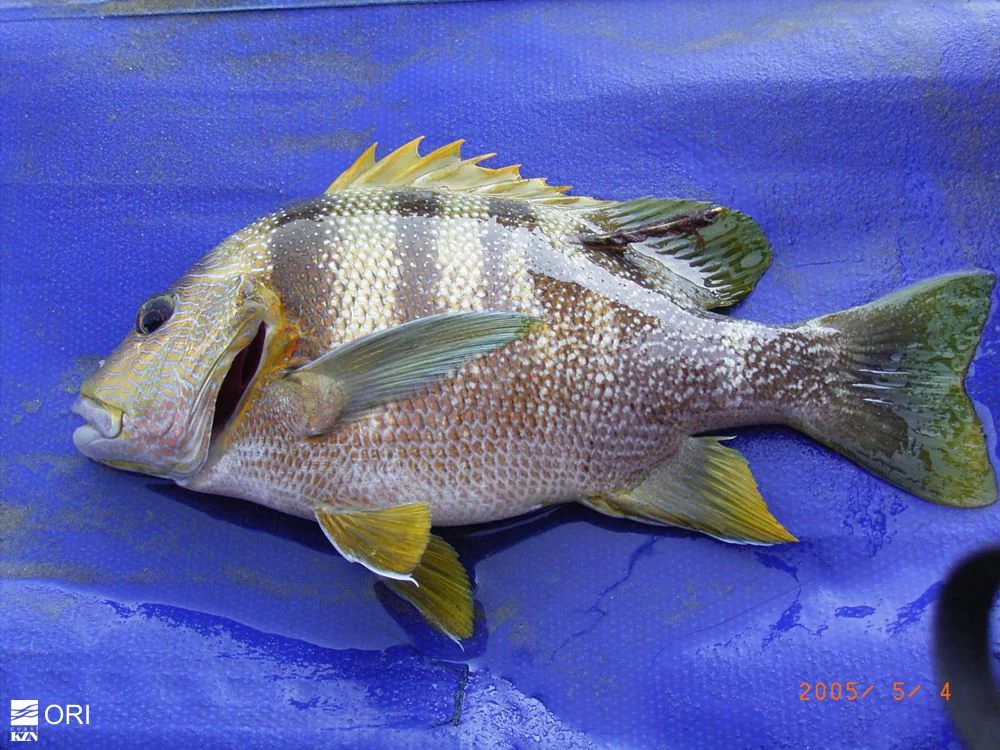
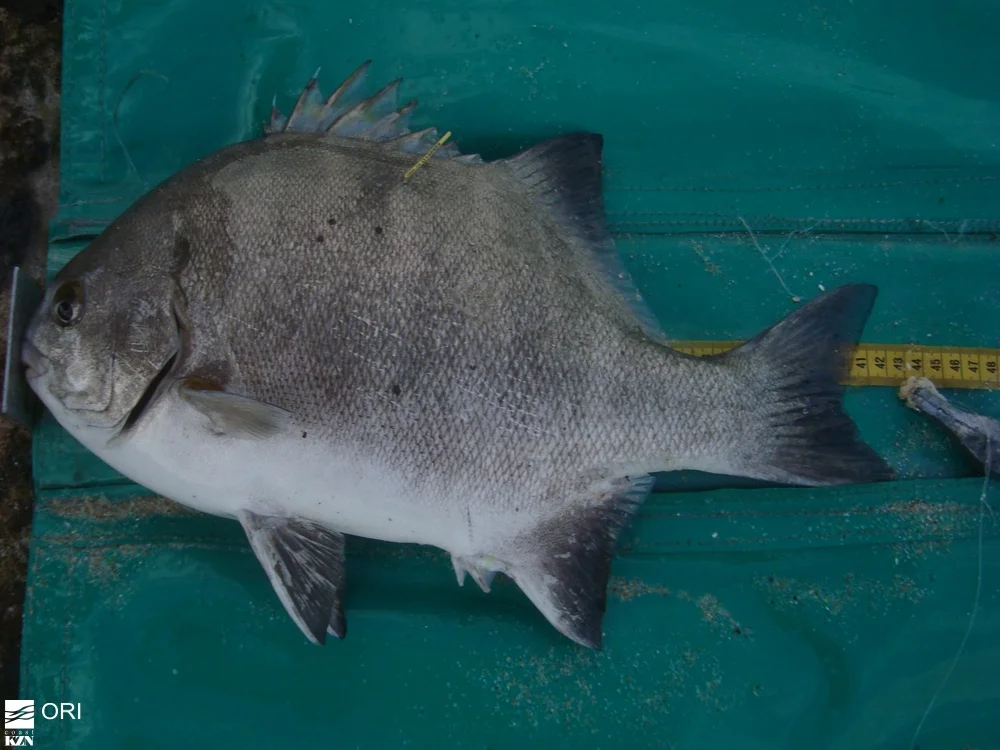
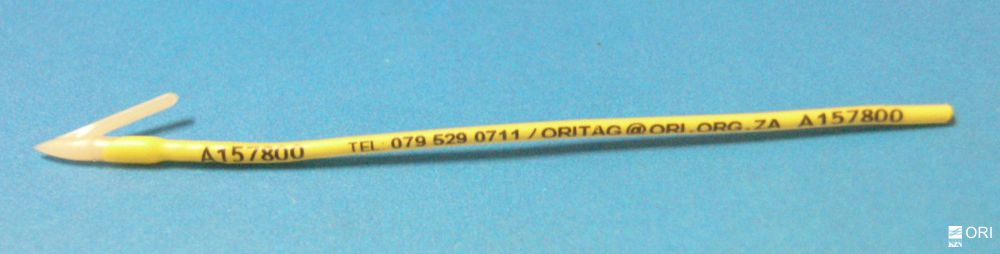
After 30 years, this project is still going strong and is undoubtedly one of the most enduring and successful environmental projects of its kind in South Africa. It involves the cooperation of conservation-conscious anglers (i.e. anglers who voluntarily tag and release their fish) and the marine angling public at large, who report the majority of the recaptures (i.e. a fish that is recaught with a tag in it) to ORI.
Despite the voluntary nature of this project, the tagging of fish still has great scientific merit, allowing us to learn more about the movement patterns, growth rates, mortality rates and population dynamics of our important linefish species. This information is extremely valuable and is used by scientists and managers around the country for policy and decision making on linefishery management. Despite the large quantity of important scientific data collected by this long-term project, the tagging project has also made a major contribution towards changing the ethics of anglers with regard to catch-and-release, which undoubtedly goes far beyond the pure scientific value of the data collected. Not only do anglers now have a reason to capture and release a fish, they are in actual fact contributing to a better understanding of the biology and ultimately the conservation of that species. This added bonus goes a long way in improving angler awareness about our marine linefish species, as well as contributing towards sustainable fishing.