Coastal Vulnerability Index

Vulnerability relates to one’s predisposition to be affected, or to be susceptible to damage. The CVI assesses the relative physical coastal vulnerability based on a set of coastal parameters which serve as indicators of vulnerability.

This assessment also tries to address social, economic and ecological factors by identifying indicators and assessing them in relation to the findings of the CVI to determine which populations and associated infrastructure are potentially at risk.


Need for this Coastal Vulnerability Assessment

Coastal regions around the world are increasingly becoming vulnerable to the effects of coastal erosion, extreme coastal storms and sea-level rise.

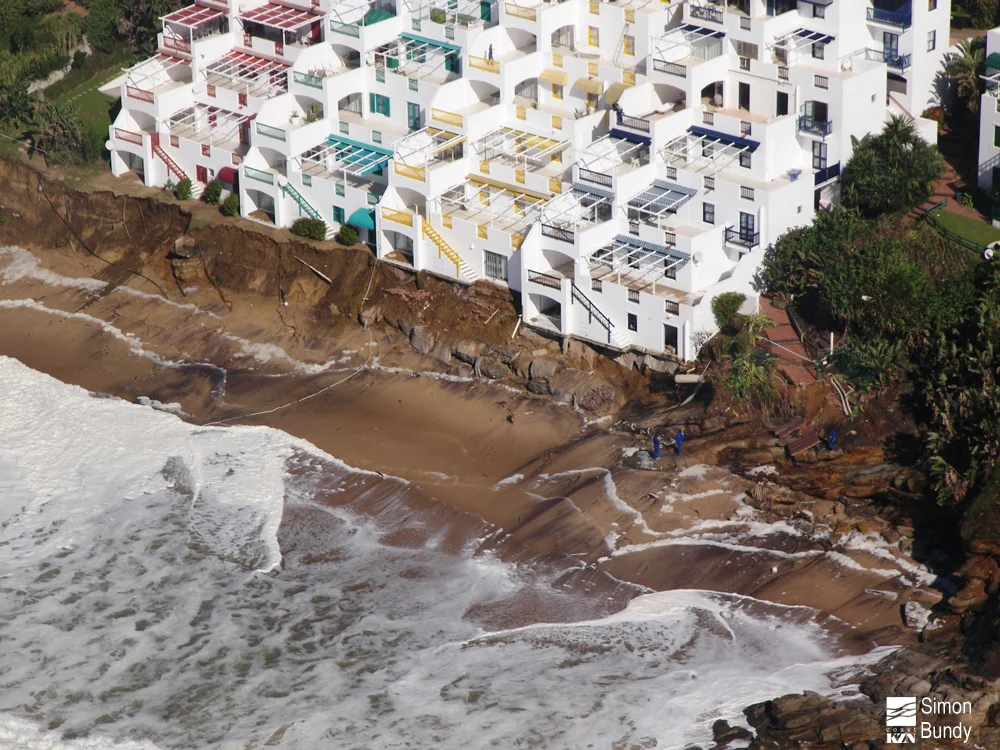
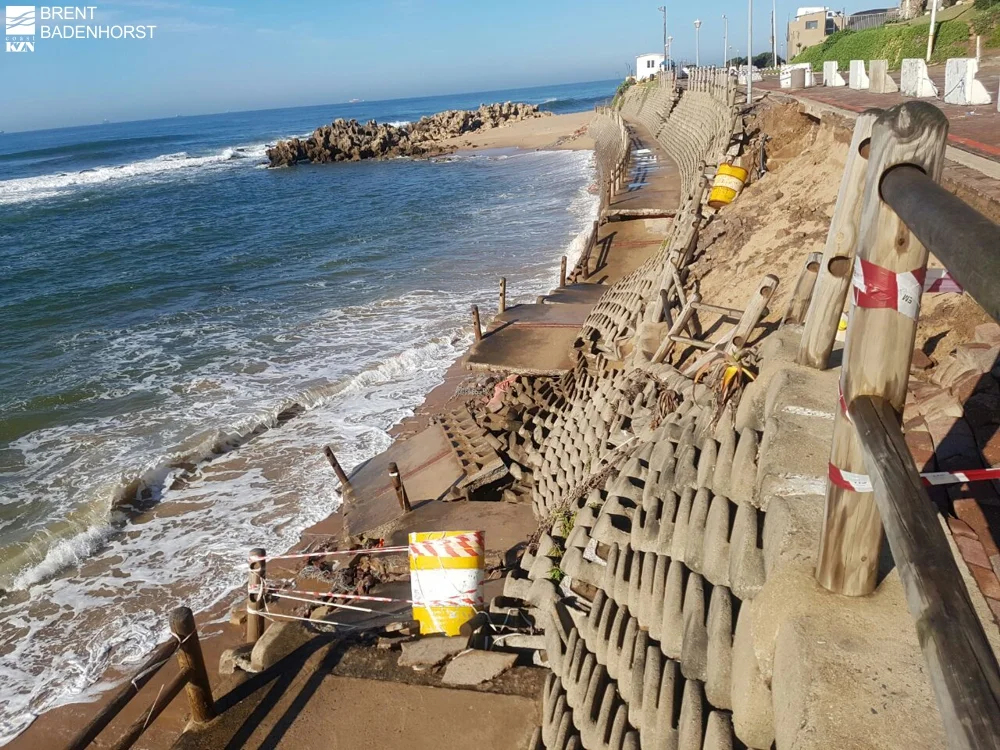
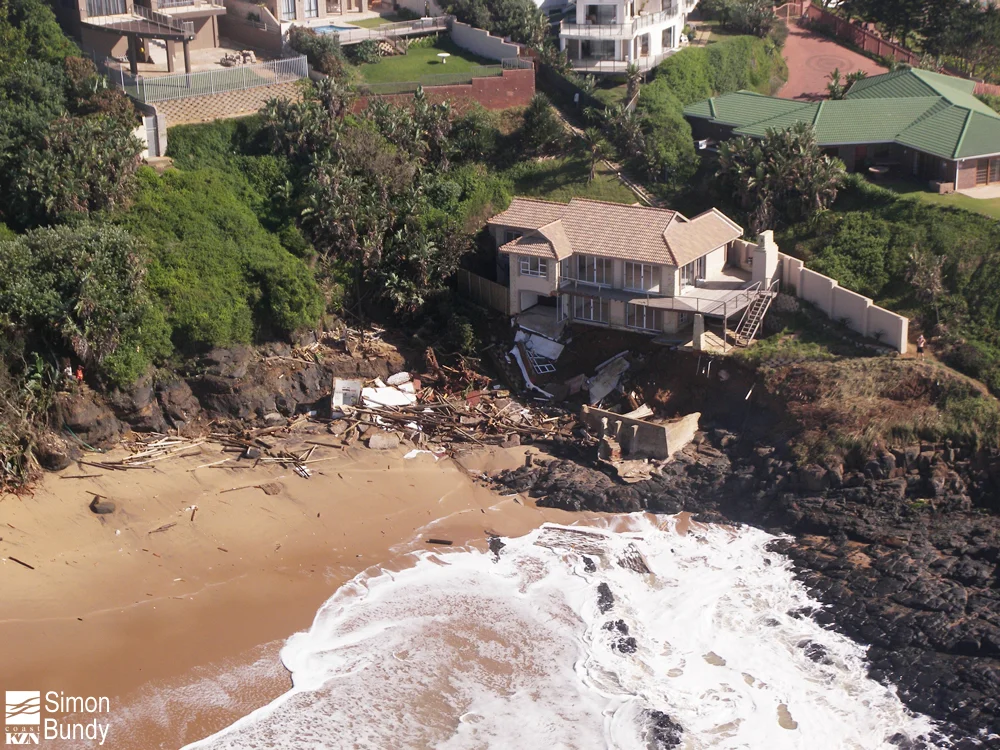
The March 2007 storm event in KZN resulted in significant damage to properties and infrastructure costing millions of rands.
Climate change predictions are that the east coast of South Africa will be subjected to increased frequency and intensity of storms.

Aim of this Assessment

Which sections of coast are at the highest physical vulnerability to future events of this nature?

What social, economic and ecological features are potentially vulnerable?
Interpretation of the CVI

RISK

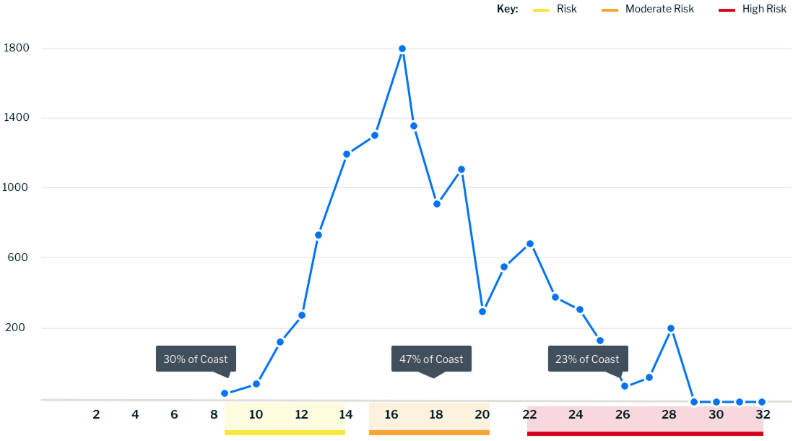
Lowest risk category – likelihood of impact or damage is lower. Physical parameters are in good condition. If developments in these areas are approved they may increase the vulnerability of these areas. New developments should be set-back appropriately so as to maintain the natural functioning of the coast.

MODERATE RISK

Sites are at higher risk than areas of Risk, but lower than areas of High Risk. Likelihood of sites being damaged is higher. Retreat and defence should be explored for existing infrastructure. New developments should be set-back sufficiently or alternative sites should be considered.

HIGH RISK

These sites are considered to be the most susceptible to the effects of erosion, sea-level rise or extreme events. Existing developments have a High likelihood of being damaged. It is recommended that the options of retreat and defence be explored. New developments should be set-back sufficiently to ensure that they are not damaged. Alternatively, new sites for the development should be considered. 

Physical CVI

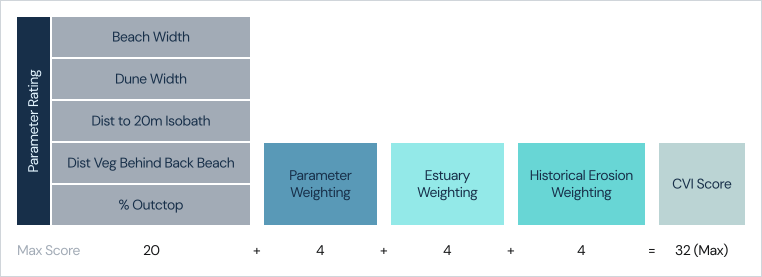
Physical Parameter

Extremely Low (1)

Low (2)

Moderate (3)

High (4)

Beach width

> 150m

100 – 150m

50 – 100m

< 50m

Dune width

> 150m

50 – 150m

25 – 50m

< 25m

Distance to the 20m isobath

> 4km

2 – 4km

1 – 2km

< 1km

Distance of veg behind back beach

> 600m

200 – 600m

100 – 200m

< 100m

Percentage outcrop

> 50%

20 – 50%

10 – 20%

< 10%

Social, Economic and Ecological Components 


  • The primary concern relates to the 23% of coast classified as High Risk.
  • The CVI identified indicator features of social, economic & ecological importance.
  • It assessed where features are in relation to cells of High Risk.
  • Features located in or across the littoral active zone are at relatively higher risk if all, or a proportion, fall directly within a cell of High Risk.

Social, Economic and Ecological Components

Economic & commercial activities

Strategic infrastructure

Recreational areas

Subsistence sites

Ecological important areas

Residential properties

Dune Mining

Piers

Boat launch sites

Subsistence fishing site

Marine protected areas

Residential erven

Forest plantation

Roads

Fishing hot spots

Subsistence harvesting sites

Bird Sanctuary sites

Sugar cane

Railway lines

Swimming beaches

Subsistence farming areas

Turtle nesting sites

Commercial & industrial buildings

Lighthouses

Sports facilities

Estuary mouth

Commercial farms

Coastal public property

Protected areas (terrestrial)

Coastal Vulnerability Index

Y Risk
X Area

Coastal Vulnerability Index

Y Risk
X Area

References

Palmer, B.J., Van der Elst, R., Mackay, F., Mather, A.A., Smith, A.M., Bundy, S.C., Thackeray, Z., Leuci, R., and Parak, O. 2011. Preliminary coastal vulnerability assessment for KwaZulu-Natal, South Africa. Journal of Coastal Research, 64.

Contributors

EDTEA • ORI

Acknowledgements

Bronwyn Goble • Rudy van der Elst • Fiona MacKay • Andrew Mather • Alan Smith • Simon Bundy • Zain Thackeray • Rio Leuci • Omar Parak

Research Funders

EDTEA • ORI